
Avenger Flight Group Bankruptcy
February 12, 2026
Executive Summary
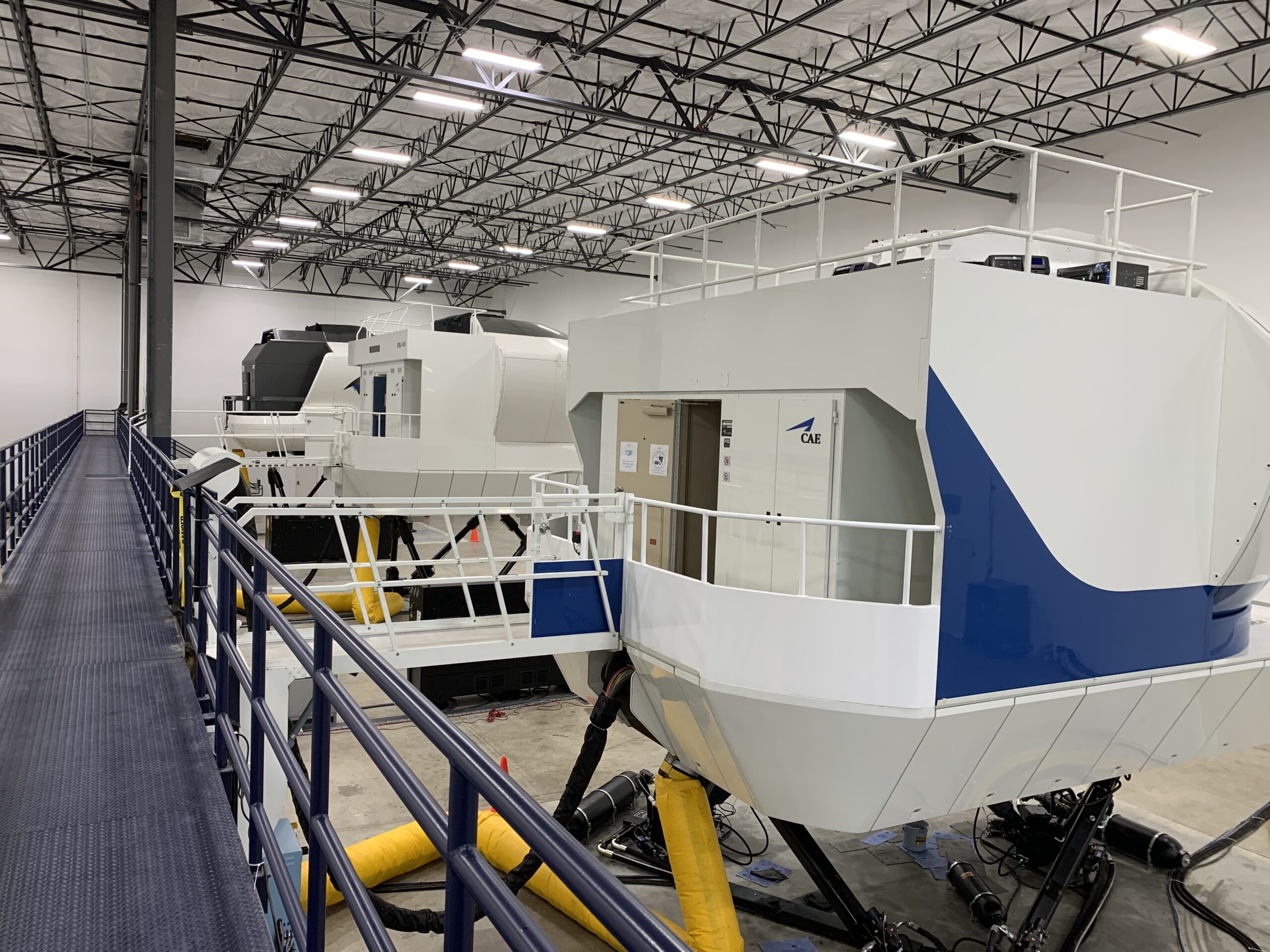
Avenger Flight Group (AFG) filed for Chapter 11 bankruptcy protection on February 12, 2026 in the United States Bankruptcy Court for the District of Delaware (Case No. 26-10192). The Fort Lauderdale, Florida-based commercial aviation training provider operates over 40 full-flight simulators across more than 10 training centers in 6 countries, including the United States, Mexico, Colombia, Spain, Germany, and Israel. As of December 31, 2025, the company employed approximately 84 people and generated about $5 million in annual revenue.
Founded in 2013 by Elsa Gagnon and Pedro Sors, AFG built its business model around providing low-cost, high-quality pilot training solutions through long-term exclusive contracts with rapidly growing low-cost carriers (LCCs). The company's simulator fleet includes Airbus A320, Boeing 737, Boeing 777, Embraer 170, and ATR models, serving major airline customers including Spirit Airlines, Allegiant Air, Frontier Airlines, Envoy, ATI (Amazon Prime Air), Omni Air, Aeromexico, Viva Aerobus, Iberia Express, DHL, Condor, and EL AL.
AFG is backed by private equity firms Patriot Capital and Seacoast Capital, which provided preferred equity growth financing starting in 2016. In July 2021, Marathon Asset Management led a $155 million senior secured credit facility to provide growth capital and refinance existing debt. The company executed a strategic divestiture in July 2025, selling a 55% majority stake in its Warsaw, Poland training center to Enter Air, including repayment of existing simulator financing.
The bankruptcy filing occurs against a backdrop of significant distress in AFG's customer base. Multiple airlines—including Spirit Airlines, Silver Airways, Seaborne Airlines, and Azul Airlines—filed for bankruptcy protection in 2025-2026, according to Holland & Knight's aviation bankruptcy update, directly impacting training demand for AFG's simulator services. This wave of airline bankruptcies, combined with broader market pressures including inflation, rising interest rates, labor cost increases, and supply chain disruptions delaying aircraft deliveries, created severe headwinds for the training provider despite operating in a flight simulator market projected to grow from $6.21 billion in 2025 to $8.59 billion by 2034.
Critical information gaps remain: No publicly available information exists regarding DIP financing arrangements, legal and financial advisors, or whether this represents a pre-packaged reorganization or a free-fall filing. The company has not disclosed official schedules of assets and liabilities, creditor lists, or restructuring plans through PACER or other public channels as of the filing date. Leadership changes occurred in late 2024 and early 2025, with founder Pedro Sors transitioning to Strategic Advisor, Andres Restrepo appointed Interim CEO, and Hooman Yazhari subsequently named Chairman, though these transitions were not publicly linked to financial distress signals prior to the bankruptcy filing.
The filing represents a significant development in the commercial aviation training sector, where AFG competed against dominant players like CAE Inc. (NYSE: CAE), which reported $1.24 billion in revenue for fiscal Q2 2026 with a $19.6 billion order backlog, and private competitor FlightSafety International, a Berkshire Hathaway subsidiary with estimated revenues around $1.3 billion.
Company Overview
Avenger Flight Group (AFG) was founded in 2013 in Fort Lauderdale, Florida by Elsa Gagnon (Senior Vice President and General Counsel) and Pedro Sors (Co-Founder and CEO). The company was established to provide low-cost, high-quality pilot training solutions tailored to rapidly growing Low Cost Carriers (LCCs) in the Americas and Europe.
Business Model and Strategic Approach
AFG's business model centers on long-term exclusive contracts with airlines, particularly low-cost carriers, offering type rating training and customized facility builds. The company operates full-flight simulators (FFS) and flight training devices (FTD) across multiple centers, with a strategic focus on establishing dedicated training facilities in proximity to airline hubs. This approach allows AFG to provide tailored solutions that meet specific airline operational requirements while maintaining competitive cost structures.
Expansion Timeline and Geographic Footprint
AFG's growth trajectory demonstrates an aggressive geographic expansion strategy across North America, Europe, and the Middle East:
| Year | Location | Key Details | Status |
|---|---|---|---|
| 2014 | Las Vegas, NV | Early U.S. expansion serving Spirit and Allegiant Air | Active |
| 2014 | Mexico City, Mexico | 10-year exclusive agreement with Aeromexico; Boeing 787 and Embraer 170 simulators | Active |
| 2016 | Dallas, TX | Near DFW Airport, partnering with Envoy, Spirit, and Avelo | Active |
| 2018 | Cancun, Mexico | A320 and ATR simulators | Closed November 2024 |
| 2019 | Monterrey, Mexico | 10-year exclusive training agreement with Viva Aerobus | Active |
| 2019 | Medellin, Colombia | Established for Viva Air | Ceased operations after airline bankruptcy |
| 2019 | Madrid, Spain | First European training center | Active |
| 2020 | Dallas 2, TX | Second Dallas facility with clients including ATP Jets, ATSG group, Envoy, and Piedmont | Active |
| 2020 | Rome, Italy | European expansion | No longer in portfolio |
| 2020 | Warsaw, Poland | European training center | 55% stake sold to Enter Air in July 2025 |
| 2021 | Orlando, FL | Serving Frontier and Spirit Airlines | Active |
| 2022 | Minneapolis, MN | Training headquarters for Sun Country Airlines | Active |
| 2024 | Frankfurt, Germany | Partnership with Condor | Active |
| 2024 | Tel Aviv, Israel | Partnership with El Al | Active |
Current Operations and Scale
As of December 31, 2025, AFG operated 10+ training centers across 6 countries, including the United States, Mexico, Colombia, Spain, Germany, and Israel. The company's simulator fleet comprised over 40 full-flight simulators representing multiple aircraft types:
- Airbus A320 family simulators
- Boeing 737 series simulators
- Boeing 777 simulators
- Embraer 170 simulators
- ATR turboprop simulators
The company employed approximately 84 people and generated approximately $5 million in annual revenue as of December 31, 2025.
Customer Base and Airline Partnerships
AFG's customer portfolio encompasses a diverse mix of low-cost carriers, cargo operators, and legacy airlines across multiple continents:
| Region | Major Customers |
|---|---|
| North America | Spirit Airlines, Allegiant Air, Frontier Airlines, Envoy, ATI (Amazon Prime Air), Omni Air |
| Mexico | Aeromexico, Viva Aerobus |
| Europe | Iberia Express, DHL, Condor |
| Middle East | EL AL |
Leadership Transitions
AFG experienced significant leadership changes during the period preceding its bankruptcy filing. In late 2024 and early 2025, co-founder Pedro Sors transitioned from his CEO role to become Strategic Advisor. Andres Restrepo was subsequently appointed as Interim CEO, followed by the appointment of Hooman Yazhari as Chairman. These rapid leadership transitions occurred during a period of strategic portfolio rationalization, including the closure of the Cancun facility in November 2024 and the divestiture of the majority stake in the Warsaw center in July 2025.
Ownership and Financial Backing
AFG is privately held and backed by private equity investors including Patriot Capital and Seacoast Capital, who provided preferred equity growth financing starting in May 2016. In July 2021, Marathon Asset Management led a $155 million senior secured credit facility to provide growth capital and refinance existing debt. The July 2025 sale of 55% of the Warsaw training center to Enter Air included repayment of existing simulator financing, representing a significant portfolio rationalization move.
Ownership and Financing History
Avenger Flight Group (AFG) has been supported by a combination of private equity sponsors and institutional debt financing since its founding in 2013. The company's capital structure evolved significantly through several phases of expansion, with Patriot Capital and Seacoast Capital providing early-stage growth capital, followed by a substantial debt refinancing led by Marathon Asset Management in 2021.
Private Equity Backing and Growth Capital
In May 2016, AFG secured preferred equity growth financing from two private equity firms: Patriot Capital and Seacoast Capital. This investment came at a critical juncture in the company's expansion, coinciding with AFG's opening of its Dallas, Texas training center near DFW Airport that same year. The preferred equity structure typically provides investors with priority claims on dividends and liquidation proceeds while allowing the company to avoid the fixed obligations of traditional debt financing.
The specific investment amounts and terms from Patriot Capital and Seacoast Capital were not publicly disclosed, reflecting the private nature of the transaction. However, the timing suggests this capital supported AFG's aggressive geographic expansion strategy, which saw the company open training centers in Mexico City (2014), Las Vegas (2014), and subsequently across multiple countries including Mexico, Colombia, Spain, Poland, Italy, and Germany through 2024.
Marathon Credit Facility and Debt Refinancing
On July 16, 2021, AFG completed a major financing milestone when Marathon Asset Management led a $155 million senior secured credit facility. This transaction served dual purposes: providing additional growth capital for continued expansion and refinancing existing debt obligations. The facility represented a significant increase in AFG's debt capacity, reflecting both the company's expanded asset base and the lenders' confidence in the commercial aviation training sector's growth prospects.
Marathon Asset Management, a global alternative asset manager specializing in credit and distressed opportunities, structured the facility as senior secured debt, giving lenders first-priority claims on AFG's assets, including its fleet of over 40 full-flight simulators and training center infrastructure across multiple countries. The specific terms, including interest rates, maturity dates, financial covenants, and security package details, were not publicly disclosed in the announcement.
The 2021 refinancing occurred during a period of optimism for the aviation training sector as airlines began recovering from pandemic-related disruptions and projected significant pilot hiring needs. AFG continued its expansion strategy post-refinancing, opening new centers in Minneapolis (2022), Frankfurt (2024), and Tel Aviv (2024).
Warsaw Divestiture and Asset Monetization
In July 2025, AFG executed a strategic transaction that marked a shift from pure expansion to selective asset monetization. The company sold a 55% majority stake in its Warsaw, Poland pilot training center to Enter Air, a Polish charter airline. The transaction structure included the repayment of existing simulator financing tied to the Warsaw facility, suggesting that AFG used proceeds to delever specific equipment debt rather than retain cash for operations.
Critically, no public valuation or transaction price was disclosed for the Warsaw sale, limiting transparency into whether AFG achieved attractive pricing or sold under pressure. The decision to divest a majority stake in a European training center—while simultaneously maintaining operations in Frankfurt and previously operating in Rome and Madrid—raises questions about the company's strategic priorities and potential liquidity pressures in mid-2025, approximately seven months before the bankruptcy filing.
Capital Structure Summary
| Date | Transaction Type | Investor/Lender | Amount | Terms/Notes |
|---|---|---|---|---|
| May 2016 | Preferred Equity | Patriot Capital, Seacoast Capital | Not disclosed | Growth financing for expansion; preferred equity structure with priority claims |
| July 16, 2021 | Senior Secured Credit Facility | Marathon Asset Management (lead) | $155 million | Growth capital and refinancing of existing debt; senior secured lien on assets; specific terms not disclosed |
| July 2025 | Asset Sale (55% stake) | Enter Air (buyer) | Not disclosed | Sale of majority stake in Warsaw training center; included repayment of simulator financing; no public valuation |
| February 12, 2026 | Chapter 11 Bankruptcy Filing | N/A | N/A | Voluntary filing; DIP financing terms not publicly disclosed; no pre-pack confirmation |
Opacity and Information Gaps
A striking characteristic of AFG's financial trajectory is the absence of public distress signals prior to the bankruptcy filing. The company continued operating its training centers and maintaining relationships with major airline customers including Spirit Airlines, Allegiant Air, Frontier Airlines, Aeromexico, and Condor through the end of 2025.
However, this apparent stability masks significant information gaps that limit independent assessment of AFG's financial health:
- Current debt levels: While the Marathon facility provided $155 million in 2021, the outstanding balance as of the bankruptcy filing is unknown. Any draw-downs, repayments, or additional borrowings since 2021 have not been disclosed.
- Covenant status: Financial maintenance covenants typical of secured credit facilities (such as minimum EBITDA, debt service coverage ratios, or maximum leverage ratios) were not disclosed. Whether AFG obtained waivers or amendments prior to filing remains unclear.
- Preferred equity terms: The liquidation preferences, dividend rates, and conversion features of the Patriot Capital and Seacoast Capital preferred equity are unknown, creating uncertainty about the recovery prospects for these investors.
- Warsaw sale proceeds: The undisclosed transaction value prevents analysis of whether AFG monetized the asset at fair value or accepted distressed pricing.
- Simulator financing obligations: While the Warsaw sale included repayment of simulator financing, the extent of equipment financing across AFG's remaining 40+ simulators is not publicly documented.
As of the February 12, 2026 bankruptcy filing, no DIP financing terms or amounts have been publicly disclosed, and the company has not identified legal or financial advisors through public channels. This lack of transparency extends to the bankruptcy process itself, with no confirmation whether AFG pursued a pre-negotiated restructuring plan or filed as a free-fall reorganization.
The opacity surrounding AFG's capital structure stands in sharp contrast to public company comparables in the aviation training sector. CAE Inc. (NYSE: CAE), the dominant global player, reported fiscal Q2 2026 revenue of $1.24 billion with detailed disclosure of its $19.6 billion order backlog and financial metrics. Similarly, FlightSafety International, while privately held by Berkshire Hathaway, benefits from parent company reporting showing revenue growth in the aviation services segment.
What Went Wrong: Contributing Factors to AFG's Bankruptcy
Avenger Flight Group's Chapter 11 filing on February 12, 2026 in the United States Bankruptcy Court for the District of Delaware reflects a confluence of macroeconomic headwinds, sector-specific competitive pressures, and company-specific operational challenges that ultimately overwhelmed the Fort Lauderdale-based training provider despite its $155 million senior credit facility from Marathon Asset Management secured in July 2021.
Broad Market Factors: Post-Pandemic Economic Headwinds
The commercial aviation training sector faced significant macroeconomic pressure in the years leading to AFG's collapse. Inflation and rising interest rates substantially increased operational costs for both training providers and their airline customers, squeezing margins across the value chain. These cost pressures were compounded by elevated labor costs as tight labor markets drove up wages for instructors, simulator technicians, and administrative staff required to maintain AFG's operations across 10+ training centers in 6 countries.
Supply chain disruptions created cascading effects throughout the aviation ecosystem. Delays in aircraft deliveries—documented extensively in the FAA Aerospace Forecast 2025-2045—meant airlines postponed fleet renewals and expansion plans, directly reducing demand for type rating training on new aircraft models. When carriers cannot take delivery of new Boeing 737 MAX or Airbus A320neo aircraft on schedule, the corresponding need for pilot training on those platforms evaporates, leaving simulator capacity underutilized.
Perhaps most critically, the post-pandemic travel recovery proved uneven and unpredictable. Premium cabin and international travel rebounded faster than domestic economy segments, creating yield pressures precisely on the low-cost carriers that formed AFG's core customer base. Airlines like Spirit Airlines, Frontier Airlines, and Allegiant Air—all AFG customers listed on the company's website—faced intense competitive pressure and margin compression, forcing them to scrutinize training expenditures and potentially renegotiate contracts or reduce training volume.
Sector-Specific Challenges: Competition Amid Market Growth
The flight simulator market presents a paradox: robust long-term growth projections alongside intensifying competitive dynamics that favor dominant incumbents. According to FlightGlobal industry analysis, the global flight simulator market is projected to expand from $6.21 billion in 2025 to $8.59 billion by 2034, driven by increasing pilot demand, technological advances in simulation fidelity, and regulatory requirements for recurrent training.
However, this growth accrues disproportionately to market leaders with scale advantages and technological capabilities. CAE Inc. (NYSE: CAE) reported fiscal Q2 2026 revenue of $1.24 billion with a 12.6% operating margin and a staggering $19.6 billion order backlog, demonstrating the competitive moat enjoyed by the industry's dominant player. FlightSafety International, a Berkshire Hathaway subsidiary, reported aviation revenues climbing 10% in Q2 2025, with estimated annual revenues around $1.3 billion.
| Company | Ownership | Recent Revenue | Operating Margin | Order Backlog |
|---|---|---|---|---|
| CAE Inc. | Public (NYSE/TSX: CAE) | $1.24B (Q2 FY2026) | 12.6% | $19.6B |
| FlightSafety International | Berkshire Hathaway (Private) | ~$1.3B (estimated annual) | Not disclosed | Not disclosed |
| Avenger Flight Group | Private (Patriot Capital, Seacoast Capital) | ~$5M (annual, as of Dec 2025) | Unknown | Not disclosed |
For a mid-sized provider like AFG, competing against these giants required continuous innovation and capital investment in next-generation simulator technology, expanded training capacity, and digital training solutions—all while operating with significantly constrained financial resources compared to competitors with billion-dollar revenue bases and deep-pocketed corporate parents.
Company-Specific Factors: Customer Bankruptcies and Operational Contraction
AFG's difficulties were dramatically amplified by a cascading series of customer airline bankruptcies that directly eliminated training revenue streams. According to Holland & Knight's 2025 Aviation Bankruptcy Update, several airlines filed for bankruptcy protection in 2025-2026, with Spirit Airlines—one of AFG's largest customers served at its Las Vegas, Dallas, and Orlando training centers—among the distressed carriers. Additional customer bankruptcies included Silver Airways, Seaborne Airlines, and Azul Airlines, each representing lost contracted training revenue.
The company's operational footprint contracted significantly in the months preceding bankruptcy. AFG closed its Cancun, Mexico training center in November 2024, eliminating A320 and ATR simulator capacity in a key Latin American market. Operations at the Medellin, Colombia center ceased following the bankruptcy of Viva Air, the facility's anchor customer under what had been envisioned as a long-term exclusive training agreement when the center opened in 2019.
Leadership instability compounded operational challenges. Pedro Sors, co-founder and CEO since the company's 2013 inception, transitioned to Strategic Advisor in late 2024. Andres Restrepo assumed the role of Interim CEO, followed by Hooman Yazhari taking the Chairman position in early 2025—a rapid succession of leadership changes during a critical period for the business.
The July 2025 sale of a 55% majority stake in AFG's Warsaw, Poland training center to Enter Air, including repayment of existing simulator financing, likely reflected acute capital needs rather than strategic portfolio optimization. Divesting a profitable European asset during a growth phase in the flight training market suggests financial pressure to generate liquidity.
The Revenue Enigma: Data Gaps or Severe Deterioration?
Perhaps most striking is the apparent disconnect between AFG's operational scale and reported financial performance. The company's stated annual revenue of approximately $5 million as of December 31, 2025—supporting 84 employees across 40+ full-flight simulators at 10+ training centers in 6 countries—appears exceptionally low for an enterprise carrying $155 million in debt from the Marathon Asset Management facility.
For context, commercial full-flight simulators typically command hourly rates ranging from $400 to $1,200+ depending on aircraft type and location. With 40+ simulators, even modest utilization rates should generate substantially higher revenue. Three potential explanations emerge:
- Data gaps: The $5 million figure may represent only a portion of AFG's revenue structure, perhaps excluding certain subsidiary operations, joint ventures, or pass-through arrangements with airlines
- Severe revenue deterioration: Customer bankruptcies, facility closures, and contract terminations may have precipitated a catastrophic revenue collapse in the quarters immediately preceding bankruptcy, rendering earlier financial data obsolete
- Accounting treatment: Complex ownership structures, including the Warsaw center sale and various exclusive airline partnerships, may result in revenue recognition that differs substantially from operational scale
Critically, no public evidence of acute financial distress was disclosed prior to the February 12, 2026 filing. Unlike many bankruptcies preceded by missed debt payments, covenant violations, going concern warnings, or distressed exchanges, AFG's collapse appears to have occurred with minimal public warning signals—suggesting either rapid deterioration in financial condition or information asymmetries between the private company and its stakeholders.
Industry Context: Aviation Training and Flight Simulation Market
The global flight simulator market presents a compelling growth opportunity, with projections showing expansion from $6.21 billion in 2025 to $8.59 billion by 2034, according to Flight Global industry analysis. This growth trajectory is driven by accelerating demand for commercial pilots, mandatory recurrent training requirements, and rapid technological advances in simulation fidelity and digital training platforms. The FAA's 2025-2045 Aerospace Forecast projects continued expansion of commercial aviation, necessitating substantial investment in training infrastructure to meet regulatory requirements and airline operational needs.
Despite this favorable market backdrop, the industry remains intensely competitive and capital-intensive, dominated by established players with global scale, diversified revenue streams, and deep relationships with major airlines and aircraft manufacturers. The commercial aviation training and simulation sector exhibits significant market concentration, with a handful of multinational corporations controlling the majority of global capacity. This oligopolistic structure creates substantial barriers to entry for smaller competitors like Avenger Flight Group (AFG), which must compete on price and location convenience rather than breadth of offerings or technological leadership.
The scale disparity between AFG and industry leaders is stark. CAE Inc. generated $1.24 billion in revenue during Q2 FY2026 alone—approximately 248 times AFG's total annual revenue of $5 million. CAE's $19.6 billion order backlog provides multi-year revenue visibility that smaller competitors cannot match, while its 12.6% operating margin demonstrates the profitability achievable at scale through operational leverage and technology ownership.
FlightSafety International, owned by Berkshire Hathaway since 1996, operates with similar advantages, including estimated annual revenue around $1.3 billion and the financial backing of one of the world's largest conglomerates. FlightSafety's 42+ Learning Centers and ownership of 1,400+ simulators—including proprietary manufacturing capabilities—create insurmountable competitive moats for firms like AFG that lease equipment and operate on razor-thin margins.
While no other commercial aviation training or simulator companies filed bankruptcy in 2025-2026, the sector experienced significant indirect distress from multiple airline bankruptcies. Spirit Airlines, one of AFG's major customers with training centers in Las Vegas, Dallas, and Orlando, filed for Chapter 11 bankruptcy protection, creating immediate revenue uncertainty for AFG. Additional airline bankruptcies including Silver Airways, Seaborne Airlines, and Azul Airlines further weakened demand for training services, particularly among the low-cost carrier segment that represented AFG's core customer base.
This wave of airline distress disproportionately impacted smaller training providers like AFG that lacked diversified customer portfolios. CAE and FlightSafety, with their global footprints and relationships spanning legacy carriers, regional airlines, cargo operators, and business aviation, could absorb individual airline failures without existential threat. AFG's concentration in low-cost carriers—already operating on thin margins and vulnerable to economic shocks—created a correlation of default risk that materialized when multiple customers simultaneously faced financial difficulties.
Restructuring Scenarios and Stakeholder Implications
Avenger Flight Group's Chapter 11 filing presents multiple potential restructuring pathways, each with distinct implications for the secured lender, equity sponsors, employees, and airline customers locked into long-term exclusive contracts. The absence of publicly disclosed DIP financing or a restructuring support agreement (RSA) suggests the company entered bankruptcy without a pre-negotiated plan, creating uncertainty around timeline and ultimate outcome.
Potential Restructuring Outcomes
The most likely scenarios range from a going-concern sale of the entire business to a standalone reorganization with significant debt restructuring:
Asset Sale to Strategic Buyer: Given AFG's portfolio of 40+ FAA-certified simulators across 10 training centers in 6 countries, a sale to an established industry player represents the highest-probability outcome. CAE Inc., the dominant global training provider with $1.24 billion in quarterly revenue and a $19.6 billion order backlog, would be a natural acquirer. FlightSafety International, the private Berkshire Hathaway subsidiary with estimated annual revenues around $1.3 billion, represents another logical strategic buyer. The July 2025 divestiture of AFG's Warsaw center to Enter Air provides recent precedent for asset sales, demonstrating marketability of individual training facilities.
Piecemeal Asset Sales: Simulator assets are relatively portable and marketable to multiple buyers. Individual training centers could be sold separately to regional operators or airlines seeking in-house training capabilities. The Minneapolis center serving as Sun Country Airlines' training headquarters and the Monterrey facility under 10-year exclusive agreement with Viva Aerobus hold particular value given embedded customer relationships. However, this approach risks lower aggregate recovery than a whole-business sale.
Standalone Reorganization: AFG could reorganize as an independent entity with Marathon Asset Management's $155 million senior secured facility converted to equity or restructured with extended maturities and reduced principal. This outcome requires rescue financing from existing sponsors or new investors and depends on demonstrating viable standalone cash flow projections. With only $5 million in annual revenue supporting 84 employees as of December 31, 2025, the company's ability to service significant debt appears challenged absent operational improvements or revenue growth.
Marathon Asset Management Recovery Analysis
Marathon Asset Management holds the strongest position among stakeholders as senior secured lender on the $155 million credit facility extended in July 2021. Recovery prospects are enhanced by substantial collateral value including simulator equipment (40+ FAA-certified full-flight simulators covering A320, 737, 777, E170, and ATR aircraft types), long-term contracts (10-year exclusive agreements with Aeromexico from 2014 and Viva Aerobus from 2019), facility leases (training centers in Fort Lauderdale, Las Vegas, Dallas, Mexico City, Monterrey, Madrid, Frankfurt, and Tel Aviv), and customer relationships with Spirit, Allegiant, Frontier, Envoy, ATI, Aeromexico, Viva Aerobus, Condor, and El Al.
Marathon's recovery is complicated by recent airline bankruptcies including Spirit Airlines, one of AFG's major customers served through the Las Vegas and Orlando facilities. Spirit Airlines filed for Chapter 11 bankruptcy, potentially impairing contract value and creating uncertainty around future training demand. Similarly, customer financial stress at other carriers could reduce the present value of long-term contract cash flows used to support collateral valuations.
Despite these complications, Marathon likely faces strong recovery given asset fundamentals. The flight simulator market is projected to grow from $6.21 billion in 2025 to $8.59 billion by 2034, supporting demand for AFG's simulator inventory. Strategic buyers would value the assembled portfolio of certified equipment and established training center locations more highly than liquidation values of individual assets.
Private Equity Sponsor Position
Patriot Capital and Seacoast Capital, which provided preferred equity growth financing starting in May 2016, face near-certain equity wipeout absent a rescue financing scenario. With Marathon holding $155 million in secured debt against a company generating only $5 million in annual revenue, there is minimal likelihood of residual enterprise value flowing to equity holders after secured creditor recovery.
The PE sponsors' only path to recovery involves providing DIP financing (by funding operations through bankruptcy, sponsors could negotiate rights to participate in exit financing or receive equity in the reorganized entity), facilitating strategic sale (sponsors could leverage industry relationships to broker a sale that maximizes enterprise value, potentially preserving some recovery through earn-outs or participation rights if sale proceeds exceed secured debt), or participating in rights offerings (in a reorganization scenario, sponsors might participate in a rights offering to recapitalize the company, converting their preferred equity position into common equity of the reorganized entity alongside debt-to-equity conversion by Marathon).
Employee Retention and Operational Continuity
The 84-person workforce as of December 31, 2025 represents critical operational continuity risk. Flight simulator instructors and maintenance technicians possess specialized skills and regulatory certifications essential to ongoing operations. Standard bankruptcy practice involves seeking court approval for Key Employee Retention Plans (KERPs) to incentivize critical personnel to remain through the restructuring process. The Bankruptcy Code provides priority status for up to $15,150 per employee in unpaid wages earned within 180 days before bankruptcy. AFG must maintain current payroll to avoid employee attrition, likely requiring DIP financing or cash collateral use approval from Marathon.
Airline Customer Contract Implications
AFG's long-term exclusive agreements with airline customers create complex restructuring dynamics. These contracts represent both valuable going-concern assets and potential rejection targets depending on profitability. Under Section 365 of the Bankruptcy Code, AFG may assume and assign valuable contracts to an acquirer or reject unprofitable agreements. In a sale scenario, AFG will likely assume and assign profitable customer contracts to the acquirer. If contracts are unprofitable or contain onerous terms, AFG may seek court approval to reject them, treating rejection as a pre-petition breach. Affected airlines would file unsecured claims for damages but must immediately secure alternative training arrangements.
Sources
- https://bkdata.com/business-bankruptcies/delaware-delaware/02-12-2026/afg-holdings-10192
- https://www.afgsim.com/flight-training-centers
- https://www.prnewswire.com/news-releases/marathon-asset-management-leads-155-million-credit-facility-to-avenger-flight-group-301325150.html
- https://crido.pl/en/press_info/news-crido-advised-avenger-flight-group-on-the-sale-of-a-majority-stake-in-the-simulator-training-centre
- https://www.hklaw.com/en/insights/publications/2026/02/2025-aviation-bankruptcy-update
- https://www.cae.com/media-centre/press-releases/cae-reports-second-quarter-fiscal-2026-results
- https://www.afgsim.com/about-us
- https://www.ainonline.com/aviation-news/business-aviation/2025-08-07/berkshire-hathaway-aviation-revenues-climb-10-2q
- https://www.flightglobal.com/aerospace/how-reshaped-flight-simulator-market-is-adapting-to-change/157096.article
- https://www.faa.gov/data_research/aviation/aerospace_forecasts/FY-2025-2045-Full-Forecast-Document-and-Tables.pdf
- https://www.pacer.gov/