
Multi-Color Corporation Bankruptcy
January 29, 2026
1. Executive Summary
On January 29, 2026, Multi-Color Corporation (MCC) and numerous affiliated debtors filed for prepackaged Chapter 11 bankruptcy in the U.S. Bankruptcy Court for the District of New Jersey (Case No. 3:26-bk-10910), seeking to eliminate approximately $3.9 billion of its $5.9 billion debt load (MCC Press Release). The restructuring is backed by an $889 million new equity investment from existing first-lien lenders and private equity sponsor Clayton, Dubilier & Rice (CD&R), which acquired MCC in 2021 and will remain the controlling shareholder post-emergence (Bondoro).
MCC's collapse is not an isolated failure but part of a broader reckoning in PE-backed industrial platforms, where high acquisition leverage collided with rising interest rates, inflationary cost pressures, and integration complexity. The company's annual cash interest expense reached $475 million by 2025—more than its entire EBITDA—making the capital structure untenable. The prepackaged filing, with support from ~72% of first-lien lenders secured prior to filing, targets a 90-day emergence with post-emergence debt of approximately $2.0 billion and over $500 million in liquidity (Chapter11Cases.com).
2. Company Overview
Founding & History: Multi-Color Corporation traces its origins to 1916, when it was established as Franklin Development Company in Cincinnati, Ohio. Over the ensuing decades, the firm expanded both organically and via strategic acquisitions, including the 2017 purchase of Constantia Flexibles GmbH's labels division and the 2019 merger with W/S Packaging Group (Chapter11Cases.com).
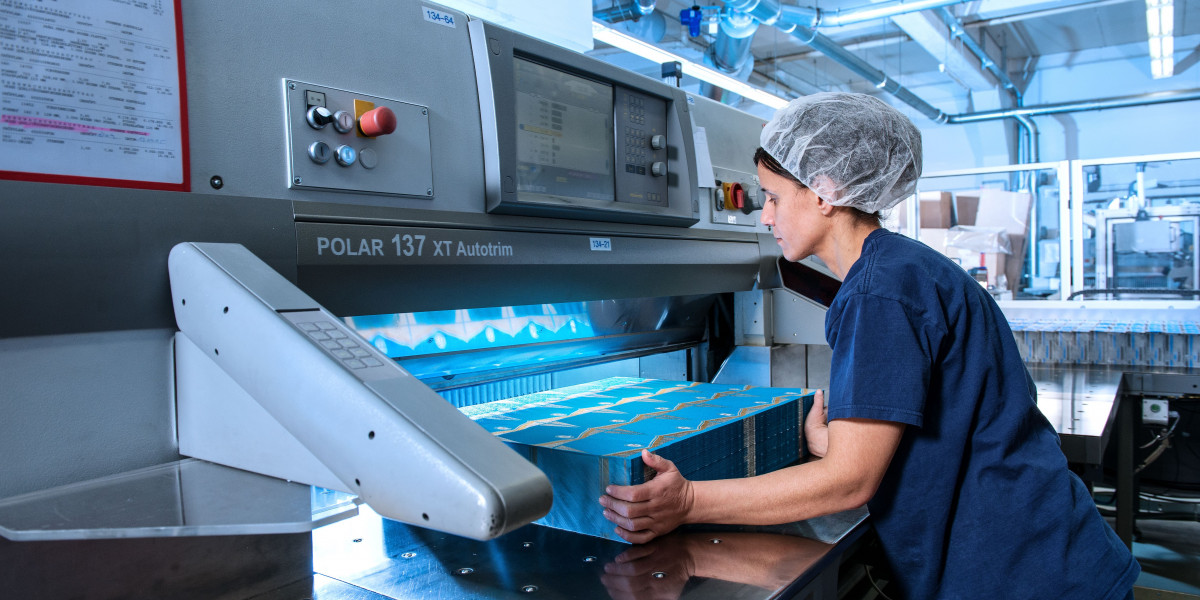
Business Model: MCC is a global leader in "prime label" solutions—the premium labels that appear on consumer products from wine bottles to shampoo containers. The company operates across six core label technologies:
| Label Technology | Revenue Share | Description |
|---|---|---|
| Pressure-Sensitive | 45% | Self-adhesive labels for beverages, food, personal care |
| Cut & Stack | 19% | Glue-applied labels for beer, beverages |
| In-Mold | 13% | Labels fused into plastic containers during molding |
| Roll-Fed | 9% | High-speed wraparound labels |
| Shrink & Sleeve | 8% | Full-body contour labels |
| RFID/Smart Labels | 2% | Digital tracking and authentication |
The company deploys multiple print technologies—flexography, gravure, offset/lithography, digital, and rotary screen printing—to meet customer requirements for durability, sustainability, and premium shelf appeal (PR Newswire).
Key Markets: Wine & spirits, food & beverage, personal care & beauty, home care & laundry, healthcare & pharmaceuticals, and durables & technical products.
Global Footprint: By the petition date, MCC operated over 90 manufacturing facilities across more than 25 countries, employing approximately 12,800 people worldwide, including 4,870 in the United States. Corporate headquarters are located in Atlanta, Georgia (Chapter11Cases.com).
Leadership (as of January 2026):
- CEO: Hassan Rmaile (appointed September 2023)
- CFO: Kathleen Phelps (appointed October 2025)
The October 2025 CFO appointment—bringing in a restructuring-experienced executive from FORTNA who had previously led Argos USA through a $3.2 billion sale—signaled the company was preparing for significant financial restructuring (MCC Press Release, October 2025).
3. Funding & Ownership History
The CD&R Acquisition and Fort Dearborn Merger
In July 2021, Clayton, Dubilier & Rice (CD&R) announced a definitive agreement to acquire and combine Fort Dearborn Company and Multi-Color Corporation to create a scaled global label manufacturer targeting approximately $3 billion in pro forma revenue (PR Newswire, July 2021). The transaction closed on November 1, 2021, with CD&R acquiring MCC from Platinum Equity and Fort Dearborn from Advent International. The combined enterprise was valued at approximately $6 billion including debt (CD&R Press Release).
Subsequent Acquisitions (2022-2024)
| Acquisition | Date | Description |
|---|---|---|
| Flexcoat Autoadesivos | November 2022 | Label operations in Brazil—MCC's first physical footprint in Brazil |
| Korsini Packaging | April 2023 | Turkish in-mold label manufacturer |
| Starport Technologies | October 2024 | Kansas City-based RFID and smart label solutions |
| Eximpro | December 2024 | Mexico's leading shrink sleeve label producer |
Debt Structure at Filing
At the time of Chapter 11 filing, MCC carried approximately $5.9 billion in total debt (Chapter11Cases.com):
| Debt Component | Amount |
|---|---|
| Secured Debt | $4.788B |
| Asset-Based Loan (ABL) | $445M |
| Cash-Flow Revolver | $200M |
| U.S. Term Loan | $1.598B |
| European Term Loan | $569M |
| Secured Notes | $1.75B |
| Finance Leases | $226M |
| Unsecured Notes (due 2027/2029) | $1.15B |
| Total Debt | ~$5.9B |
Early Warning Signs: S&P Global had flagged concerns as early as October 2020, warning that pro forma debt-to-EBITDA leverage exceeded 10x (S&P Global). In January 2026, MCC elected not to make a $36.2 million interest payment on its 2027 unsecured notes, triggering a 30-day grace period—the immediate precursor to the Chapter 11 filing.
4. What Went Wrong
Market-Level Factors
Inflationary Pressures (2021-2025): Raw materials critical to label production—including resins, adhesives, inks, and specialty films—experienced significant price increases. Energy costs, particularly in European operations, surged following geopolitical disruptions. These cost increases compressed margins at a time when MCC's pricing power with large CPG customers remained limited (Chapter11Cases.com).
Rising Interest Rates: The Federal Reserve's aggressive monetary tightening cycle—from near-zero rates in 2021 to above 4% by late 2025—dramatically increased MCC's debt servicing burden. Annual cash interest expense reached approximately $475 million by 2025—the restructuring aims to reduce this to roughly $140 million, representing more than $330 million in annual savings (MCC Press Release).
Labor Market Pressures: Manufacturing operations in North America and Western Europe faced persistent labor shortages and wage inflation.
Industry Factors
Post-COVID Demand Normalization and Destocking: The label and packaging industry experienced a significant destocking cycle beginning in late 2022 and extending through 2024-2025. As supply chains stabilized, customers strategically reduced inventory levels.
Competitive Dynamics: MCC faced intensifying competition from lower-cost producers in Asia and Eastern Europe. Simultaneously, sustainability mandates triggered capital-intensive investments in recyclability and digital tracking technologies.
Company-Specific Factors
Integration Complexity: MCC's rapid acquisition pace post-2021 complicated integration. Systems harmonization across 90+ facilities in 30+ countries lagged, preventing full realization of scale benefits.
Management Turnover:
- August 2023: CEO Kevin Kwilinski departed; Board Chairman David Scheible appointed interim CEO
- September 2023: Hassan Rmaile appointed permanent CEO
- October 2025: CFO Kathleen Phelps appointed
Financial Deterioration:
| Metric | 2022 | 2025 | Change |
|---|---|---|---|
| Revenue | $3.56B | $3.06B | -14% |
| EBITDA | $598M | $409M | -32% |
5. Sector Context: PE-Backed Packaging in Distress
MCC's Chapter 11 filing is emblematic of a broader reckoning in PE-backed packaging platforms.
The PE Playbook in Packaging
Since 2015, major PE firms aggressively pursued packaging assets for their stable cash flows. However, when sponsors paid 10-12x EBITDA multiples and financed with 6-8x debt, they left minimal margin for error. The macro environment of 2022-2025 exposed these fragile capital structures.
Comparables and Industry Stress
- Amcor (NYSE: AMCR): Margin pressure in 2025; avoided restructuring through cost cuts.
- CCL Industries (TSX: CCL.B): Debt-to-EBITDA exceeded 5x; entered asset sale discussions.
- Graphic Packaging (NYSE: GPK): Leverage reached 6.2x; issued dilutive equity.
- Avery Dennison (NYSE: AVY): The healthy comp. Net debt-to-EBITDA of 2.4x, investment-grade.
The Pattern
| Company | Ownership | Leverage | Outcome |
|---|---|---|---|
| Multi-Color Corp | CD&R (PE) | ~10x+ | Chapter 11 filing |
| CCL Industries | Public | ~5x | Asset sale discussions |
| Graphic Packaging | Public | ~6x | Equity issuance |
| Avery Dennison | Public | ~2.4x | Stable, investment-grade |
The pattern is unmistakable: ownership structure and leverage determined which companies weathered the storm.
6. Bankruptcy Mechanics
Filing Details: Multi-Color Corporation filed voluntary prepackaged Chapter 11 petitions on January 29, 2026, in the U.S. Bankruptcy Court for the District of New Jersey under Case No. 3:26-bk-10910 (PacerMonitor). Foreign affiliates are proceeding under Chapter 15 recognition.
Restructuring Support Agreement: Prior to filing, MCC executed an RSA with approximately 72% of first-lien lenders and CD&R (MCC Press Release).
DIP Financing
| Component | Amount |
|---|---|
| New money | $250 million |
| Roll-up of prepetition debt | ~$407.5 million |
| Total DIP facility | $657.5 million |
| Interim access approved | $125 million |
Professional Advisors
| Role | Firm |
|---|---|
| Debtor Counsel | Kirkland & Ellis LLP; Cole Schotz P.C. |
| Investment Banker | Evercore |
| Financial Advisor | AlixPartners |
| Communications | FGS Global |
| Claims Agent | Verita Global |
| CD&R Counsel | Debevoise & Plimpton; Latham & Watkins |
| Ad Hoc Lenders Counsel | Milbank LLP |
| Ad Hoc Lenders FA | PJT Partners |
Operational Continuity: All global operations continue. Trade vendors expected to be paid in full. The company's "Project Optimus" turnaround initiative continues in parallel (MCC Press Release).
7. Potential Outcomes
MCC is targeting a 90-day emergence from Chapter 11.
| Metric | Pre-Filing | Post-Emergence |
|---|---|---|
| Total funded debt | ~$5.9 billion | ~$2.0 billion |
| Available liquidity | Limited | $500+ million |
| Annual cash interest | ~$475 million | ~$140 million |
| Annual interest savings | — | >$330 million |
| Debt maturities | 2025-2029 | Extended to 2033 |
Stakeholder Treatment
- CD&R remains controlling shareholder post-emergence
- First-lien lenders convert claims to new equity, backstopping $889M investment
- General unsecured creditors expected to be unimpaired
- Trade vendors paid in full
8. Key Unknowns
| Gap | Detail |
|---|---|
| Exit multiples | Recovery value for first-lien lenders unclear |
| Integration status | Progress on systems consolidation not disclosed |
| Customer retention | Risk of supplier switching during restructuring |
| Facility rationalization | Which of 90+ plants may close? |
| International restructuring | Chapter 15 terms for non-US subsidiaries pending |
Sources
- MCC Press Release - Recapitalization Announcement (January 27, 2026)
- CD&R Press Release - Fort Dearborn/MCC Merger (July 2021)
- CD&R Press Release - Transaction Close (November 2021)
- Chapter11Cases.com - MCC Filing Summary (January 2026)
- Bondoro Filing Alert (January 30, 2026)
- PacerMonitor - Case No. 3:26-bk-10910
- Verita Global - Claims Agent Website
- MCC Press Release - CFO Appointment (October 2025)
- S&P Global - MCC Credit Watch (October 2020)