
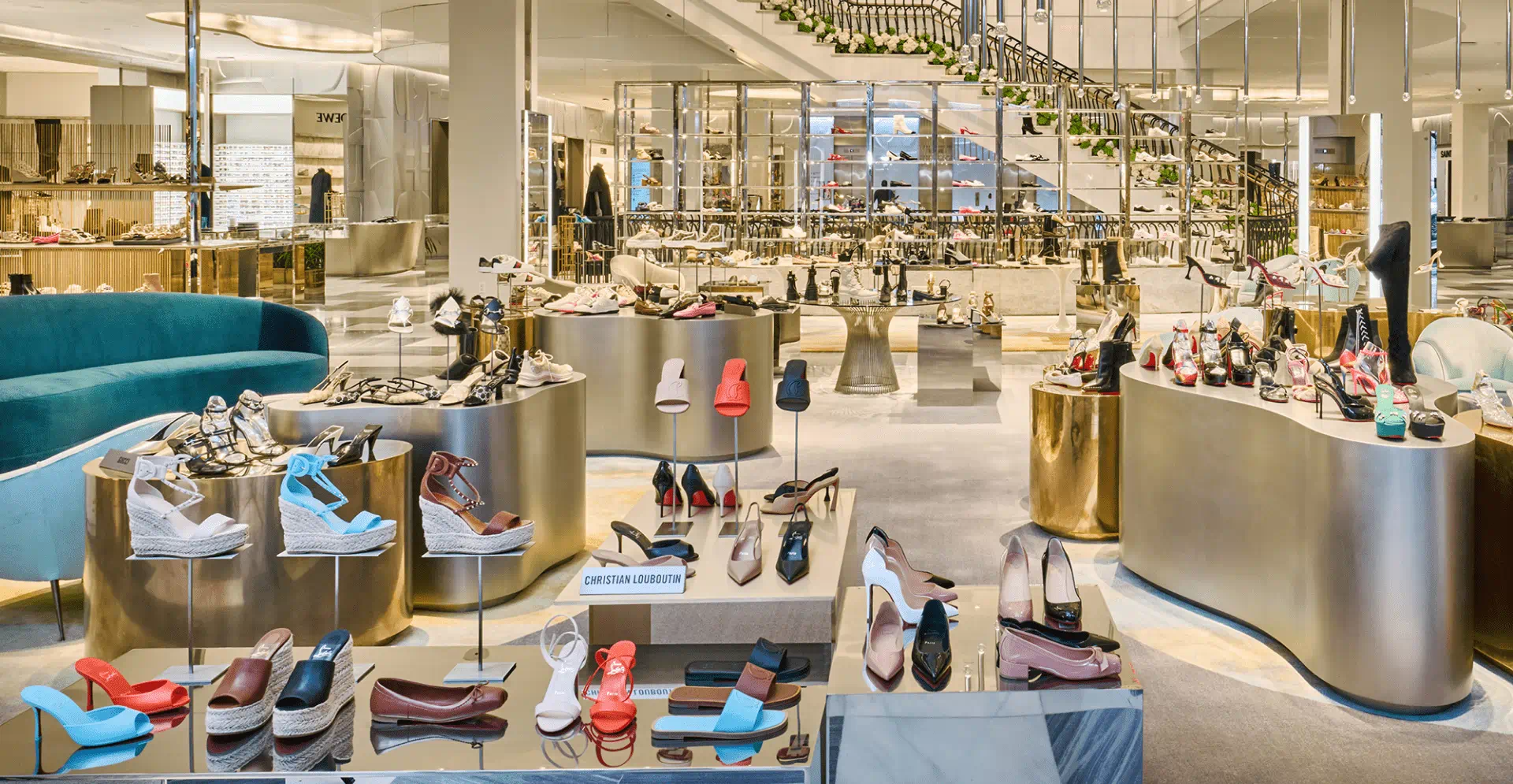
Saks Global Bankruptcy
January 14, 2026
1. Executive Summary
On January 14, 2026, Saks Global Enterprises LLC and 14 affiliated debtors filed for Chapter 11 bankruptcy protection in the U.S. Bankruptcy Court for the Southern District of Texas (Case No. 4:26-bk-90103), listing assets and liabilities each between $1 billion and $10 billion (Reuters). The filing came just weeks after the company missed a $100 million interest payment in December 2025 and accumulated $200-300 million in unpaid vendor invoices.
The bankruptcy represents the collapse of "Saks Global," the luxury retail conglomerate formed in December 2024 through a $2.7 billion merger of Saks Fifth Avenue and Neiman Marcus Group—backed by Amazon ($475 million) and Salesforce ($300 million). The combined entity carried approximately $3.4 billion in funded debt at filing, including $2.2 billion in senior secured bonds and a $275 million acquisition note due February 2026.
Saks secured $1.75 billion in DIP financing—$1.5 billion from senior secured bondholders and $240 million from asset-based lenders—plus a committed $500 million exit facility. The company has announced the closure of 57 of 69 Saks OFF 5TH stores and all 5 Last Call locations, projecting $139 million in losses from the OFF 5TH segment alone. This "free-fall" Chapter 11—filed without a restructuring support agreement—marks one of the largest retail bankruptcies since the pandemic era.
2. Company Overview
Founding & History
Saks Fifth Avenue was founded in 1867 by Andrew Saks as a men's clothing store in New York City. Bernard Gimbel joined in 1902, and the iconic Fifth Avenue flagship opened in 1924, cementing Saks' reputation as a premier luxury retailer (Wikipedia).
Neiman Marcus was established in Dallas in 1907 by Herbert Marcus, Sr., Carrie Marcus Neiman, and Abraham Lincoln Neiman. The company grew into a leading fashion retailer known for exclusive merchandise and personalized service (Wikipedia). Neiman Marcus previously filed for Chapter 11 in May 2020 during the pandemic and emerged in September 2020.
The 2024 Merger
In July 2024, Hudson's Bay Company (HBC) announced the acquisition of Neiman Marcus Group to merge with Saks Fifth Avenue in a deal valued at $2.7 billion (DigitalCommerce360). The transaction closed in December 2024, forming "Saks Global" with funding from:
| Investor | Amount | Role |
|---|---|---|
| HBC | $1.5 billion | Majority owner |
| Amazon | $475 million | Minority stake, exclusive online merchandising rights |
| Salesforce | $300 million | Luxury customer data platform access |
| Apollo Global Management | $1.15 billion | Lead debt financing |
Business Operations
Saks Global's multi-brand portfolio comprises:
- Saks Fifth Avenue (full-line luxury department stores)
- Neiman Marcus (full-line luxury department stores)
- Bergdorf Goodman (ultra-luxury flagship, New York)
- Saks OFF 5TH (off-price retail)
- Last Call (Neiman Marcus outlet stores)
- Horchow (home furnishings catalog/e-commerce)
The combined entity operated 70 full-line luxury stores, numerous off-price locations, and five e-commerce platforms across North America, with 8.4 million square feet of owned or ground-leased real estate, including flagship stores in New York City, Chicago, Beverly Hills, and Miami (Reuters).
Employees
As of the January 14, 2026 bankruptcy filing, Saks Global employed approximately 16,830 people—87% full-time, 22% salaried (Reuters).
Leadership
Saks Global experienced significant leadership turnover in the weeks before filing:
- Marc Metrick - CEO, stepped down January 5, 2026 after nearly 30 years with the company
- Richard Baker - HBC Executive Chairman, took over as CEO briefly, then stepped down January 13, 2026
- Geoffroy van Raemdonck - Former Neiman Marcus Group CEO, appointed CEO January 13, 2026 (one day before filing)
3. Funding & Capital Structure
HBC and the Path to Merger
Hudson's Bay Company acquired Saks Fifth Avenue in 2013, with Richard Baker serving as HBC's Governor and Executive Chairman. Baker orchestrated the 2024 merger with Neiman Marcus as a strategy to create a luxury retail powerhouse capable of competing with digital-native platforms.
The Amazon and Salesforce Bets
Amazon's $475 million investment came with exclusive online merchandising rights—a strategic move to gain a foothold in luxury e-commerce. Salesforce contributed $300 million for access to Saks Global's luxury customer data platform, betting on the value of high-net-worth consumer insights (WSJ, Vogue).
Debt Structure at Filing
At filing, Saks Global listed approximately $3.4 billion of funded debt:
| Debt Component | Amount |
|---|---|
| Senior secured bonds | $2.2 billion |
| Term loan agreements | $1.2 billion |
| Acquisition-related note (due Feb 2026) | $275 million |
| Total Funded Debt | ~$3.4 billion |
(Reuters)
Early Warning Signs
- December 2025: Missed $100 million interest payment, triggering credit rating downgrades
- Late 2025: $200-300 million in delayed vendor invoices accumulated
- January 5, 2026: CEO Marc Metrick's sudden departure
- January 13, 2026: Richard Baker steps down; emergency CEO appointment
4. What Went Wrong
Market-Level Factors
Inflation and Rising Interest Rates
High inflation and the Federal Reserve's aggressive rate-hiking cycle through 2024-2025 dampened aspirational luxury spending. Consumers pulled back on discretionary purchases, particularly in the "affordable luxury" segment that bridged Saks OFF 5TH and the full-line stores. Elevated borrowing costs also strained Saks Global's leveraged balance sheet, with significant debt service requirements competing for cash flow.
Shifting Consumer Preferences
The luxury consumer increasingly favored experiences over goods, while digital-native competitors like Farfetch and SSENSE captured market share from traditional department stores. Younger affluent consumers showed less brand loyalty to legacy retailers.
Industry Factors
Department Store Secular Decline
Saks Global's bankruptcy continues a brutal decade for department stores:
- Sears (2018)
- Barneys New York (2019)
- Lord & Taylor (2020)
- JCPenney (2020)
- Neiman Marcus (2020—emerged, then merged into Saks)
The sector faces structural challenges: high fixed costs (real estate, labor), inventory risk, and an increasingly difficult value proposition against both luxury specialists and e-commerce giants.
Digital Disruption
Luxury e-commerce platforms captured affluent consumers seeking convenience and curation without the department store overhead. Traditional players struggled to match the technology investment and customer experience of digital natives.
Company-Specific Factors
Post-Merger Integration Failures
The December 2024 merger created immediate operational challenges. Mismatched IT systems and inventory-management failures led to stockouts during peak holiday 2024 and early 2025 seasons—precisely when the combined entity needed flawless execution (Reuters).
Vendor Relationship Collapse
By late 2025, Saks Global had accumulated $200-300 million in unpaid vendor invoices. Major luxury brands began limiting or pulling merchandise:
| Brand/Vendor | Impact |
|---|---|
| Chanel | Reduced shipments |
| Gucci | Reduced shipments |
| Kering | Credit concerns |
| LVMH | Credit concerns |
| David Yurman | Unpaid invoices |
| Roberto Coin | Unpaid invoices |
| Elisamama | 50-60% of business at risk |
Smaller vendors filed lawsuits (Gabriella Rossetti Inc., Catherine Regehr Inc.), and the resulting supply issues created a vicious cycle: empty shelves drove away customers, reducing revenue, further delaying payments.
Management Instability
Three CEOs in nine days (Metrick → Baker → van Raemdonck) signals either a planned transition obscured by the bankruptcy timeline or genuine leadership chaos. Either way, the rapid succession undermined confidence among employees, vendors, and investors.
OFF 5TH Drag
The off-price division proved catastrophic. Saks OFF 5TH projected a $139 million loss for 2025, forcing the company to announce closure of 57 of 69 stores (82%) and the SaksOff5th.com e-commerce site on January 30, 2026—just 16 days after filing.
5. Sector Context: The Department Store Reckoning
The Last of the Department Store Giants
Saks Global's bankruptcy marks a watershed moment for American retail. The merger of Saks and Neiman Marcus was supposed to create a luxury retail champion—a scaled platform capable of competing with e-commerce and extracting synergies from a combined footprint. Instead, it created a leveraged entity that collapsed under the weight of integration challenges, vendor disputes, and a changing consumer.
Comparable Outcomes
| Retailer | Year | Outcome |
|---|---|---|
| Sears | 2018 | Chapter 11, liquidation of most stores |
| Barneys New York | 2019 | Chapter 11, sold to Authentic Brands |
| Lord & Taylor | 2020 | Chapter 11, brand sold to Saadia Group |
| JCPenney | 2020 | Chapter 11, sold to Simon/Brookfield |
| Neiman Marcus | 2020 | Chapter 11, emerged September 2020 |
| Saks Global | 2026 | Chapter 11, restructuring underway |
The Amazon Factor
Amazon's $475 million investment and exclusive online merchandising deal raised eyebrows at announcement. Critics questioned whether Amazon—a company that has disrupted every retail category it enters—was a partner or a predator. The bankruptcy raises questions about Amazon's intentions: was this a genuine luxury play, or reconnaissance for a category it will eventually dominate independently?
Reports of a "bitter rift" between Saks leadership and Amazon emerged post-filing, suggesting the partnership failed to deliver expected digital synergies (WSJ).
Luxury Resilience—For Some
While Saks Global collapsed, pure-play luxury continues to show resilience. LVMH, Hermès, and Richemont reported solid results through 2025, demonstrating that the luxury consumer remains healthy—they're just shopping elsewhere. The department store format, not luxury demand, is the problem.
6. Bankruptcy Mechanics
Filing Details
Saks Global Enterprises LLC and 14 affiliated debtors filed voluntary Chapter 11 petitions on January 14, 2026, in the U.S. Bankruptcy Court for the Southern District of Texas under Case No. 4:26-bk-90103, presided by Judge Alfredo R. Pérez (Stretto, PacerMonitor).
Case Type: Free-Fall Chapter 11
Unlike Multi-Color Corporation's prepackaged filing, Saks Global entered bankruptcy without a restructuring support agreement (RSA). This "free-fall" approach indicates creditor negotiations had not reached consensus before the liquidity crisis forced the company's hand.
DIP Financing
Saks Global secured a robust $1.75 billion DIP financing package to fund operations:
| Component | Amount | Source |
|---|---|---|
| Senior secured bondholder DIP | $1.5 billion | Ad hoc group |
| Asset-based lender DIP | $240 million | ABL lenders |
| Total DIP | $1.75 billion | |
| Initial tranche | $1.0 billion | For immediate operations |
| Exit facility (committed) | $500 million | Upon emergence |
Professional Advisors
| Role | Firm |
|---|---|
| Debtors' Counsel | Willkie Farr & Gallagher LLP; Haynes and Boone, LLP |
| Investment Banker | PJT Partners LP |
| Financial Advisor | Berkeley Research Group |
| Strategic Communications | C Street Advisory Group |
| Ad Hoc Group Counsel | Paul, Weiss, Rifkind, Wharton & Garrison LLP |
| Ad Hoc Group Banker | Lazard Frères & Co. |
| Ad Hoc Group Advisor | FTI Consulting, Inc.; Kekst CNC |
| Claims Agent | Stretto (cases.stretto.com/saks) |
Store Closures (Announced January 30, 2026)
| Segment | Action |
|---|---|
| Saks OFF 5TH stores | 57 of 69 closing (82%) |
| Last Call stores | All 5 closing |
| SaksOff5th.com | Shutting down |
| Remaining OFF 5TH | 12 stores (for liquidation inventory) |
Closing sales began January 31, 2026.
Operational Continuity
First-day motions were filed to maintain customer programs, honor gift cards, continue vendor payments for critical suppliers, and ensure employee payroll throughout the restructuring process.
7. Potential Outcomes
Path 1: Standalone Restructuring
Saks Global emerges from Chapter 11 as a smaller, deleveraged entity focused on full-line luxury (Saks Fifth Avenue, Neiman Marcus, Bergdorf Goodman) after shedding the money-losing OFF 5TH and Last Call segments. First-lien creditors convert debt to equity; Amazon and Salesforce may retain minority stakes or negotiate exits.
Path 2: Strategic Sale
The company pursues a Section 363 sale of some or all assets. Potential acquirer categories include:
- Luxury conglomerates (LVMH, Kering) seeking U.S. retail distribution
- Private equity (Apollo, given existing debt relationship)
- Real estate investors (for flagship properties)
- Brand licensing firms (Authentic Brands Group) for name/IP
Path 3: Piecemeal Liquidation
If no viable restructuring or sale emerges, individual brands and properties could be sold separately: Bergdorf Goodman to one buyer, Neiman Marcus to another, flagship real estate to a third.
Expected Timeline
Given the free-fall nature of the filing and ongoing store closures, a longer timeline than typical prepackaged cases is expected:
| Milestone | Expected Date |
|---|---|
| First-day motions approval | January 2026 |
| DIP financing approval | January 2026 |
| Store closure completion | Q1-Q2 2026 |
| RSA / plan negotiations | Q2 2026 |
| Plan confirmation | Q3-Q4 2026 |
8. Key Unknowns
| Gap | Detail |
|---|---|
| Amazon/Salesforce treatment | Will Amazon and Salesforce recover any of their $775 million combined investment? Do they hold liquidation preferences? |
| Vendor claims | Total vendor claims unknown; $200-300M confirmed unpaid, but additional claims may emerge |
| Full-line store performance | Was the issue solely OFF 5TH, or are flagship stores also underperforming? |
| Real estate strategy | Which flagship properties will be retained, sold, or converted to alternative uses? |
| Brand separation | Could Neiman Marcus be re-separated from Saks if a unified restructuring fails? |
| RSA negotiations | Timeline and terms for creditor agreement remain fluid |
| Customer retention | Will affluent customers return to Saks/Neiman post-emergence, or has brand damage been done? |
Sources
- Reuters - Saks Global Bankruptcy Filing Details (January 14, 2026)
- Reuters - How Saks' Big Merger Bet Failed (January 8, 2026)
- Reuters - Saks Prepares Bankruptcy (December 31, 2025)
- DigitalCommerce360 - Saks/Neiman Marcus Merger Announcement (July 2024)
- RetailDive - Saks Global Completes Acquisition (December 2024)
- WSJ - Saks/Amazon Rift
- Vogue - Amazon's Path to Luxury
- RetailTouchpoints - HBC to Buy Neiman Marcus
- PR Newswire - Saks Global DIP Financing (January 14, 2026)
- Stretto - Claims Agent Portal
- PacerMonitor - Case No. 4:26-bk-90103
- Wikipedia - Saks Fifth Avenue
- Wikipedia - Neiman Marcus